

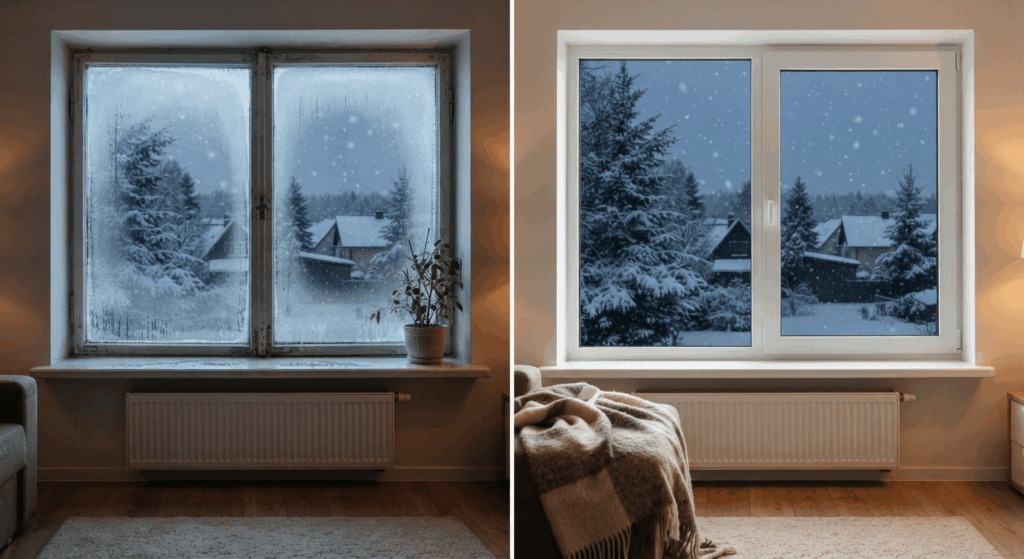
Winter can quickly reveal problems that may go unnoticed during warmer months. Draughts around window frames, cold glass, condensation and rooms that are difficult to keep warm can all be signs that your existing windows are no longer performing as effectively as they should.
For homeowners dealing with older or inefficient double glazing, winter window replacement can be an opportunity to address these issues. Installing modern double-glazed windows can help improve thermal comfort, reduce draughts and enhance the overall performance of your home’s windows and doors.
Although window replacement is often associated with spring and summer, there are practical reasons to consider upgrading your glazing during winter. The colder weather makes existing problems easier to identify, while new double glazing can provide benefits when your home needs better insulation most.
Why Winter Is a Good Time to Assess Your Windows
Cold weather provides a useful test of how well your windows are performing. When temperatures drop, weaknesses in older glazing, frames and seals can become much more noticeable.
You may notice:
- Draughts around window and door frames
- Cold areas close to windows
- Condensation on the inside of the glass
- Misted or cloudy double-glazed units
- Rooms that are difficult to keep warm
- Uneven temperatures between rooms
- Increased use of your heating system
These issues do not automatically mean that your windows need complete replacement. However, they can indicate that the glazing, seals, frames or hardware should be inspected.
Winter therefore provides a practical opportunity to assess whether your existing windows are still suitable for your home or whether new double glazing could offer a better solution.
How New Double Glazing Can Improve Energy Efficiency
One of the main reasons homeowners consider window replacement is to improve the thermal performance of their property.
Windows are one part of the overall building envelope, and older glazing may provide less effective insulation than modern double-glazed systems, particularly when seals, frames or sealed units have deteriorated.
Modern double glazing uses two panes of glass separated by an insulating gap. Depending on the specification, the glass, spacer, frame and installation can work together to reduce heat transfer through the window.
Replacing inefficient windows may therefore help your home retain warmth more effectively and maintain a more comfortable indoor temperature during winter.
The potential improvement will vary depending on the condition of your existing windows, the property itself, the replacement window specification and the quality of installation. Energy savings should therefore be considered on a property-by-property basis rather than assumed to be the same for every home.
Make Cold Rooms and Draughts Less Noticeable
A home can feel cold even when the heating is running if there are significant draughts or cold areas around windows.
Older windows can develop worn seals, gaps around frames and problems with opening mechanisms. These issues can allow unwanted air movement and contribute to uncomfortable cold spots.
Modern replacement windows are designed with improved sealing and insulation. When correctly specified and installed, they can help reduce draughts around window openings and make rooms feel more comfortable.
This can be particularly noticeable in rooms where you spend a lot of time, such as living rooms, bedrooms and home offices.
Improve Comfort Throughout the Winter
Energy efficiency is only part of the reason to consider winter window replacement. Comfort is another important consideration.
Cold glass and draughts can make areas near windows feel noticeably colder than the rest of a room. Older or poorly performing windows may also contribute to temperature differences between rooms.
New double glazing can help provide a more consistent indoor environment by improving insulation around window openings.
For homeowners, this may mean fewer noticeable cold spots and a more comfortable home during the colder months.
What About Condensation and Misted Double Glazing?
Condensation is one of the most common window problems noticed during winter, but it is important to understand where the condensation is occurring.
Condensation on the room-facing surface of the glass can be related to indoor humidity, ventilation and the temperature of the glass. Improving ventilation and managing indoor moisture may help in these circumstances.
However, condensation between the panes of a double-glazed unit is different. It can indicate that the sealed unit has failed, allowing moisture to enter the space between the panes. This is commonly known as misted or blown double glazing.
A failed sealed unit can affect the appearance of the window and may reduce its insulating performance.
Importantly, a failed sealed unit does not always mean that the entire window needs replacing. If the existing frame is still in good condition, glass-only replacement may be an option.
A professional assessment can help determine whether replacing the sealed glass unit or the complete window is more appropriate.
Replace Only What Your Home Needs
Window replacement does not necessarily mean removing every existing frame.
If your frames are structurally sound but the sealed glass units have failed, replacement glazing may provide a suitable alternative to complete window replacement.
Glass-only replacement may be worth investigating if you have:
- Misted double glazing
- Condensation between panes
- Failed sealed units
- Cracked glass
- Poor-performing glazing
On the other hand, complete window replacement may be more appropriate when frames are damaged, severely deteriorated, poorly fitting or no longer suitable for modern glazing.
This is why an assessment of the existing windows is important before deciding on the type of replacement.
Improve Home Security With Modern Replacement Windows
Winter also means longer periods of darkness, making window and door security an important consideration.
Older windows may have outdated locks, worn hardware or frames that no longer provide the level of security expected from modern installations.
Depending on the design and specification, modern replacement windows can incorporate features such as:
- Multi-point locking systems
- Modern locking hardware
- Secure handles
- Robust window frames
- Laminated safety or security glass
- Internal glazing beads
The appropriate security specification will depend on the property, window style and individual requirements.
Replacing older windows can therefore be an opportunity to address both thermal performance and security at the same time.
New Double Glazing Can Also Help Reduce Outside Noise
Thermal performance is not the only potential benefit of modern glazing.
If your home is located near a busy road, town centre, railway line or another source of external noise, replacing older windows with appropriately specified double glazing may help reduce the amount of sound entering the property.
However, acoustic performance depends on more than simply having two panes of glass. Glass thickness, glass configuration, the frame and installation quality can all influence the result.
For properties with significant external noise, specialist acoustic glazing may be worth considering as part of the replacement window specification.
Can Windows Be Replaced During Winter?
Some homeowners delay window replacement because they are concerned about having openings in their home during cold weather.
In practice, professional window replacement can generally be carried out throughout the year using appropriate installation methods.
Installers normally work systematically, removing and replacing windows individually rather than leaving large areas of the property exposed for extended periods. Appropriate precautions can also be taken to minimise heat loss and disruption during the work.
Availability will vary between installers and regions. Winter may sometimes offer more scheduling flexibility than the traditionally busy spring and summer periods, although this should not be assumed.
The most important consideration is choosing an experienced installer who can carry out the work correctly for the property and conditions.
When Should You Consider Winter Window Replacement?
There is no universal rule that says every homeowner should replace their windows during winter.
However, it may be worth arranging an inspection if you are experiencing:
- Persistent draughts
- Misted double glazing
- Condensation between glass panes
- Cracked or damaged glass
- Windows that are difficult to open or close
- Cold spots around windows
- Damaged seals
- Deteriorating frames
- Outdated locking systems
- Poor thermal comfort
Some of these problems may be resolved through repairs or replacement glass rather than complete window replacement.
The condition of the existing windows should therefore guide the decision.
Choosing the Right Replacement Double Glazing
If you decide that replacement is appropriate, the specification of the new windows matters.
Factors to consider include:
- Glass specification
- Frame material and design
- Thermal performance
- Window style
- Security features
- Acoustic requirements
- Ventilation requirements
- Installation quality
- Building requirements
A window that performs well on paper can still underperform if it is poorly fitted. Professional measurement and installation are therefore important parts of the replacement process.
It is also worth considering the condition of the surrounding structure before installation, particularly in older properties.
Is Winter the Right Time to Replace Your Windows?
The right time for winter window replacement depends on the condition of your existing windows, your property’s requirements, your budget and installer availability.
Winter does, however, provide a clear opportunity to identify problems.
If you can feel draughts around your windows, notice persistent cold spots, see misting between panes or struggle to maintain comfortable temperatures, these issues may indicate that your existing glazing needs attention.
Replacing inefficient windows with modern double glazing may help improve thermal comfort, reduce unwanted draughts and enhance the overall performance of your home.
In other cases, replacing only failed sealed units or carrying out repairs may be a more appropriate solution.
Final Thoughts
Winter is one of the best times to understand how well your windows are actually performing. Cold weather can make draughts, cold spots, condensation and failed double-glazed units much easier to identify.
For properties with outdated or inefficient windows, new double glazing can improve more than just appearance. Depending on the existing condition and replacement specification, it can contribute to better thermal comfort, reduced draughts, improved security and potentially better acoustic performance.
However, replacing every window is not always necessary. Misted or failed sealed units may sometimes be resolved through glass-only replacement, while minor problems may be suitable for repair.
If you are considering winter window replacement, having your existing windows professionally assessed can help you understand whether complete replacement, replacement glazing or repairs are the most suitable option for your home.