


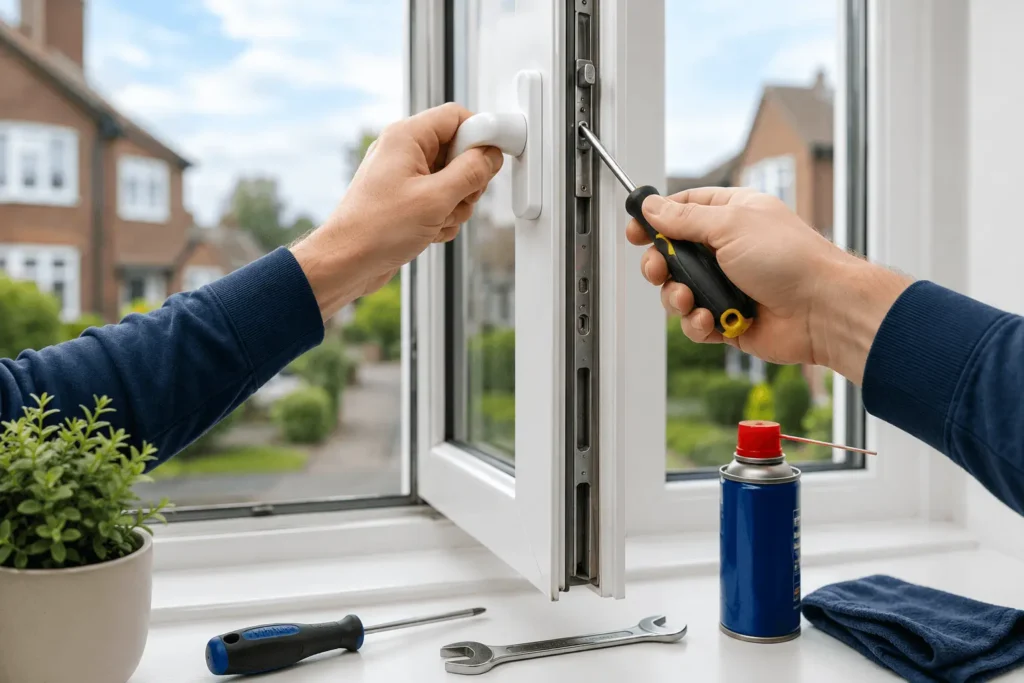
A window that is difficult to open or has become completely stuck can be frustrating, particularly when you need ventilation or access to the room. Fortunately, a stuck window does not always mean that the entire unit needs replacing.
Windows contain several moving components, including handles, hinges, locks, bolts, stays and other fittings. Over time, these parts can become worn, dirty, damaged or misaligned, making the window increasingly difficult to operate.
Whether you have uPVC, timber, aluminium, casement or sash windows, understanding the cause of the problem can help you decide whether a simple maintenance task is enough or whether professional window repair is required.
This guide explains the most common causes of stuck windows in UK properties, how to identify potential problems and what you can do to keep your windows operating smoothly.
Why Do Windows Get Stuck?
Windows can become difficult to open or close for several reasons. Some problems develop gradually through everyday use, while others can occur following damage, building movement or changes in weather conditions.
The most common causes include:
Dirt and Debris
Dust, dirt and grime can accumulate around window tracks, hinges, locking points and other moving components.
This is particularly common around sliding window tracks, where a build-up of debris can create resistance and eventually prevent the window from moving correctly.
Regular cleaning can help prevent this type of problem.
Worn or Damaged Window Hardware
Window hardware experiences regular use and can eventually wear out.
Handles, hinges, locks, shoot bolts, stays and other fittings can become loose, damaged or stiff. If one component stops working correctly, it can affect the operation of the entire window.
Warping and Expansion
Changes in temperature and moisture can affect certain window materials.
Timber windows, for example, can respond to changes in humidity, while uPVC and other materials can also experience some movement as temperatures fluctuate.
If the opening section becomes misaligned with the frame, the window may begin to catch or become increasingly difficult to operate.
Building Movement
Properties naturally experience a degree of movement over time. In some circumstances, movement can affect the alignment of window openings.
If several windows and doors throughout a property suddenly begin sticking, it may be worth having the underlying issue assessed rather than simply replacing individual components.
How to Diagnose a Stuck Window
Before attempting to repair a window, it is important to identify what is actually causing the problem.
Forcing a window open without understanding the fault could damage the frame, glass or locking mechanism.
Here are some common symptoms and what they could mean.
The Window Is Stiff Even When Unlocked
If the handle and locking mechanism operate normally but the window itself feels stiff, check the tracks, hinges and surrounding areas for dirt or debris.
Cleaning the affected area may be enough to restore normal movement.
If the track is bent or damaged, however, it may require adjustment or replacement.
The Window Opens but Will Not Close Properly
A window that opens normally but will not close or lock correctly could have an alignment problem or an issue with its locking components.
Check for obvious damage around the locking points, keeps and bolts.
Do not force the handle if it feels unusually stiff, as this could damage the internal mechanism.
The Window Handle Is Faulty
A loose, broken or stiff handle can prevent the locking mechanism from operating correctly.
In some cases, replacing the handle is a relatively straightforward repair. If the internal gearbox or locking system has also failed, more specialist attention may be necessary.
The Window Is Completely Jammed
A window that will not move at all could have a failed locking mechanism, damaged hardware, severe misalignment or a combination of problems.
Avoid using excessive force to release it. Forcing a jammed window can cause damage to the frame or glass and potentially increase the cost of the repair.
How to Open a Stuck Window Safely
The best way to release a stuck window depends on the type of window and the cause of the problem.
Before attempting to open it, check whether the handle is moving correctly and whether there is any visible obstruction around the frame.
You can also:
- Check that the window is fully unlocked.
- Inspect visible hinges, locks and fittings.
- Look for dirt or debris around tracks and moving parts.
- Check whether the frame appears misaligned.
- Try operating the window gently without applying excessive force.
- Stop if the window does not release easily.
Using improvised tools to manipulate a failed locking mechanism is generally not advisable, particularly if you are unfamiliar with the window’s construction.
If the window remains firmly stuck, a qualified window repair professional can identify the fault without unnecessarily damaging the unit.
How to Fix a Stuck Window
Once the cause has been identified, the appropriate repair may involve cleaning, adjustment, lubrication or replacing a faulty component.
Clean the Window Tracks
For sliding windows, dirty tracks are a common cause of stiffness.
To clean them:
- Open the window as far as safely possible.
- Remove loose dirt and dust with a cloth.
- Use a vacuum cleaner to remove debris from the track.
- Clean the track using a suitable household cleaning solution.
- Wipe away any remaining residue.
- Dry the area thoroughly before closing the window.
Avoid allowing excessive moisture to collect around timber frames or other materials that may be affected by prolonged exposure to water.
Replace a Faulty Handle
If the handle is broken, loose or no longer operates correctly, replacing it may resolve the problem.
However, replacement handles are not universal. Make sure the new handle is compatible with the existing window and locking system.
Check the Hinges and Stays
On hinged windows, worn or loose hinges and stays can affect alignment.
If the opening section catches against the frame or appears to sit unevenly, the hardware may need adjustment or replacement.
Inspect the Locking Mechanism
If the handle turns but the window will not unlock or close correctly, there could be an issue with the internal locking mechanism.
Depending on the window design, this could involve the gearbox, shoot bolts, keeps or other components.
Some hardware can be replaced individually, but internal locking mechanisms can be more complex. Professional assistance may therefore be appropriate.
Should You Repair or Replace a Stuck Window?
A stuck window does not necessarily need to be replaced.
If the frame, glazing and main structure are in good condition, repairing or replacing a faulty component may be the more practical solution.
Repair May Be Suitable When:
- The handle is damaged
- A hinge or stay has become worn
- A locking component has failed
- Tracks require cleaning or adjustment
- A small item of hardware needs replacing
- The window remains structurally sound
Replacement May Be Worth Considering When:
- The frame is severely damaged
- The window is significantly warped
- The same problem keeps returning
- The window has reached the end of its useful life
- The glazing and frame have widespread deterioration
- Repairs would no longer provide a reliable long-term solution
A professional inspection can help determine whether window repair or replacement makes the most sense for your property.
How to Prevent Windows from Sticking
Regular maintenance can help prevent many common window problems.
UK properties are exposed to changing weather throughout the year, so keeping window frames, hardware and drainage areas clean can be particularly important.
Keep Window Tracks Clean
Dirt and debris can gradually accumulate around tracks and moving components.
Clean them periodically by:
- Removing loose dust with a cloth
- Vacuuming dirt from the tracks
- Cleaning the area with an appropriate solution
- Removing excess moisture
- Checking for signs of mould, corrosion or damage
Sliding windows should receive particular attention because debris can interfere with the movement of the opening section.
Lubricate Suitable Moving Parts
Appropriate lubrication can help reduce friction around suitable hinges, locks and other moving components.
Use a lubricant recommended for your particular window hardware and follow the manufacturer’s instructions.
Apply only a small amount and operate the window several times to distribute it evenly.
Avoid over-lubricating components because excess lubricant can attract dust and grime.
Should You Use WD-40 on Windows?
WD-40 is commonly used for household maintenance, but it is not necessarily the appropriate long-term lubricant for every type of window hardware.
Always check the manufacturer’s recommendations and use a product suitable for the specific component.
Check Your Window Hardware Regularly
A quick inspection can help identify developing problems before a window becomes completely stuck.
Look for:
- Loose handles
- Stiff or damaged hinges
- Corrosion
- Bent locking points
- Cracked fittings
- Gaps around the frame
- Difficulty turning the handle
- Increasing resistance when opening or closing
Addressing a small fault early can often prevent a more serious repair later.
When Should You Call a Window Repair Professional?
While basic cleaning and simple maintenance can resolve some problems, certain faults are better handled by a professional.
Consider getting professional help if:
- The window is completely jammed
- The locking mechanism has failed
- The frame appears badly distorted
- The glass is damaged
- The window is difficult or unsafe to access
- Several windows have suddenly started sticking
- You cannot identify the cause of the problem
- The window requires excessive force to operate
Professional assessment can help identify the underlying fault and prevent unnecessary damage to the window.
Frequently Asked Questions About Stuck Windows
Why has my window suddenly become difficult to open?
A sudden problem could be caused by a failed handle, damaged locking mechanism, worn hinge or obstruction. Changes in alignment or temperature can also affect how easily a window operates.
Can a stuck window be repaired?
In many cases, yes. Depending on the fault, the solution could involve cleaning, adjustment, lubrication or replacement of individual components.
How can I make my windows easier to open?
Keep tracks and moving parts clean, inspect the hardware regularly and use suitable lubrication where recommended by the manufacturer.
Why will my window open but not close?
Possible causes include misaligned locking points, damaged hardware, frame movement or a problem with the locking mechanism.
Should I force a stuck window open?
No. Excessive force can damage the frame, glass or hardware. If gentle operation and basic cleaning do not resolve the problem, professional assistance is recommended.
How often should window tracks be cleaned?
There is no fixed schedule for every property. However, inspecting and cleaning tracks regularly can help prevent dirt and debris from affecting window operation.
Can a broken window handle be replaced?
Often, yes. However, the replacement needs to be compatible with the existing window and locking system. If the internal mechanism has also failed, additional repair may be required.
When should I replace a stuck window?
Replacement may be appropriate if the window is badly damaged, significantly warped, repeatedly develops faults or has reached the end of its serviceable life. A professional assessment can help you make the right decision.
Keep Your Windows Operating Smoothly
A stuck window does not automatically mean that you need completely new windows. In many UK properties, the underlying issue can be traced to dirt, worn hardware, damaged fittings or alignment problems.
Regular cleaning and maintenance can help prevent these issues, while addressing minor faults early can reduce the likelihood of more costly repairs.
If a window remains jammed or you are unsure what is causing the problem, avoid forcing it. A qualified window professional can assess the condition of the frame, glazing and hardware and recommend the most appropriate solution.
Whether your property has uPVC, timber, aluminium, sash or casement windows, timely maintenance and professional repairs can help keep them secure, functional and performing properly for years to come.