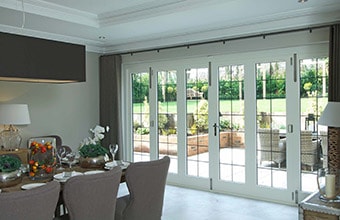


Bifold doors are a popular feature in many UK homes, offering a seamless connection between indoor and outdoor living spaces. Their wide glass panels maximise natural light and create an open, contemporary feel—but they also present a unique challenge when it comes to window dressings.
So, should you choose blinds or curtains for your bifold doors? The answer depends on your priorities, whether that’s privacy, light control, insulation, style or ease of use.
This guide explores the most popular ways to dress bifold doors, along with the pros and cons of each option, helping you decide which solution is best for your home.
What Are Bifold Doors?
Bifold doors consist of multiple glazed panels connected by hinges that fold neatly to one or both sides when opened. Unlike traditional patio doors, they create a much wider opening, making them ideal for connecting living areas with gardens, patios, balconies or conservatories.
Their combination of practicality, natural light and modern aesthetics has made bifold doors a popular choice in both new-build and renovated homes across the UK.
Common Materials Used for Bifold Doors
Bifold doors are available in several materials, each offering different benefits.
- Aluminium – Strong, slim-framed, low maintenance and ideal for contemporary homes.
- Timber – A traditional option that provides excellent insulation and a warm, natural appearance.
- uPVC – A cost-effective choice offering good thermal performance and minimal maintenance.
The right material often depends on your budget, style preferences and the character of your property.
Why Window Dressings Matter
Although bifold doors look stunning on their own, adding the right window dressing improves both comfort and functionality. Depending on your choice, you can:
- Improve privacy
- Control natural light
- Reduce glare
- Increase thermal efficiency
- Enhance your interior décor
- Protect furnishings from UV exposure
The key is choosing a solution that doesn’t interfere with the smooth operation of the doors.
The Most Popular Ways to Dress Bifold Doors
1. Curtains
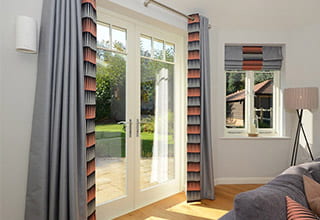
Curtains remain one of the most popular choices for bifold doors thanks to their versatility and decorative appeal. They can soften the clean lines of large glazed doors while adding warmth and texture to a room.
When fully opened, curtains frame the doors beautifully, while closed curtains provide excellent privacy and insulation.
Popular curtain styles include:
- Blackout curtains
- Sheer curtains
- Thermal curtains
- Voile curtains
- Patterned curtains
- Made-to-measure curtains
Best for: Traditional interiors, cosy living spaces and homeowners wanting maximum insulation.
2. Blinds
Blinds provide a sleek, modern appearance and excellent control over both light and privacy. They are especially popular because they can often be fitted directly to individual door panels, allowing the doors to fold without obstruction.
Common blind options include:
- Roller blinds
- Venetian blinds
- Roman blinds
- Vertical blinds
- Perfect Fit blinds
- Integral blinds (sealed within the glazing)
Best for: Contemporary homes, minimalist interiors and spaces where practicality is a priority.
3. Plantation Shutters
Plantation shutters offer a premium, built-in appearance while providing outstanding control over privacy, ventilation and sunlight.
Although they generally require a higher initial investment, they are durable, easy to maintain and can add value to a property.
Best for: Period homes, luxury interiors and homeowners seeking a long-term solution.
4. Privacy Glass
Privacy or obscured glazing provides permanent privacy without the need for additional window coverings.
While this option reduces the need for curtains or blinds, it offers limited flexibility when controlling daylight levels.
Best for: Bathrooms, home offices and overlooked properties.
5. Sliding Panels and Screens
Sliding fabric panels or decorative screens are becoming increasingly popular in modern homes. They create a clean architectural look while offering flexible privacy and light control.
They can also double as room dividers in open-plan living spaces.
Best for: Large openings and contemporary interior designs.
Blinds vs Curtains for Bifold Doors
Both options have their advantages and the best choice depends on your priorities.
Benefits of Curtains
- Wide variety of colours, fabrics and styles
- Excellent privacy
- Improve insulation during colder months
- Help reduce outside noise
- Add softness and warmth to interiors
- Can be made to measure for large openings
Potential Drawbacks of Curtains
- May collect dust more easily
- Require occasional washing or dry cleaning
- Can appear bulky in smaller rooms
- Need sufficient wall space when fully opened
Benefits of Blinds
- Clean and modern appearance
- Excellent light control
- Compact and space-saving
- Easy to operate
- Low maintenance
- Available in moisture-resistant materials for kitchens and utility rooms
Potential Drawbacks of Blinds
- Some styles offer less insulation than curtains
- Certain materials can be more difficult to clean
- May provide limited privacy depending on the fabric or slat design
Benefits of Plantation Shutters
- Long-lasting and highly durable
- Excellent thermal performance
- Stylish, premium appearance
- Easy to clean
- Precise control over light and privacy
- Can increase the perceived value of a home
Potential Drawbacks of Plantation Shutters
- Higher upfront cost
- Usually require professional installation
- Fewer design options compared with fabrics
How to Prepare Bifold Doors Before Installing Window Dressings
Proper preparation helps ensure your chosen window dressing fits correctly and operates smoothly.
1. Clean the Doors Thoroughly
Remove dust, dirt, grease and fingerprints from the frames and glazing before installation. Use a soft cloth and a non-abrasive cleaner suitable for your door material.
2. Check the Door Operation
Open and close the doors fully to ensure the tracks, hinges and locking mechanisms operate correctly. Lubricate moving parts with a silicone-based lubricant if required.
3. Measure Carefully
Accurate measurements are essential.
Measure:
- Door width
- Door height
- Individual panel widths
- Clearance around the frame
Always double-check measurements before ordering made-to-measure blinds, curtains or shutters.
4. Install the Correct Hardware
Fit curtain tracks, poles or blind brackets according to the manufacturer’s recommendations. Ensure fixings are secure and positioned so they won’t interfere with the folding action of the doors.
5. Consider Additional Features
Modern window dressings can include useful upgrades such as:
- Motorised blinds
- Smart home integration
- Thermal linings
- Blackout fabrics
- Curtain tiebacks
- Child-safe operating systems
These features can improve convenience, energy efficiency and day-to-day usability.
Which Option Is Best for Bifold Doors?
There isn’t a single solution that suits every home.
- Choose curtains if you want a softer appearance, improved insulation and a traditional feel.
- Choose blinds if you prefer a streamlined, practical solution with excellent light control.
- Choose plantation shutters if you’re looking for a premium, long-lasting investment that combines style with performance.
Ultimately, the best window dressing is one that complements your home’s design while providing the right balance of privacy, functionality and ease of use.
By carefully considering your space, lifestyle and budget, you can select a solution that enhances both the appearance and practicality of your bifold doors for years to come.
If you’d like, I can also optimise this for SEO by adding keyword-focused headings, FAQs, internal linking opportunities and a meta title and meta description.